Computer Vision
WildVision AI
- Industry
- Wildlife & Conservation
- Duration
- 2 Months
- Team Size
- 2 Members
- Platform
- Web / CLI (Windows / Linux / macOS)
The Challenge
Monitoring wildlife across hours of safari footage is slow and error-prone, and single-frame detections often misidentify fast-moving or partially visible animals.
- Manually reviewing long video feeds is time-consuming for park rangers.
- Single-frame detections produce false positives on occluded or blurred animals.
- Distinguishing visually similar species (e.g. antelopes) requires high accuracy.
- Processing full video at every frame is computationally expensive.
Our Solution
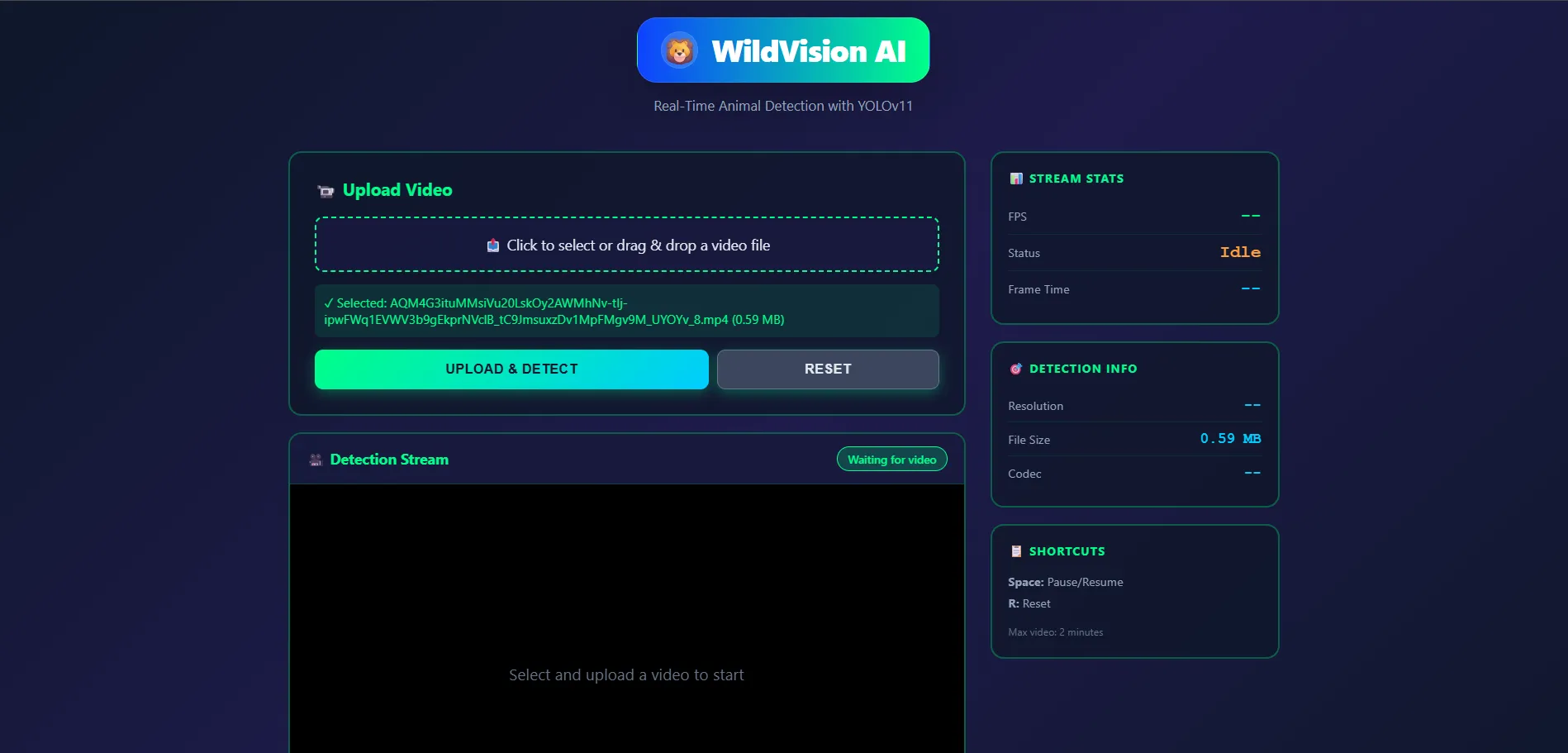
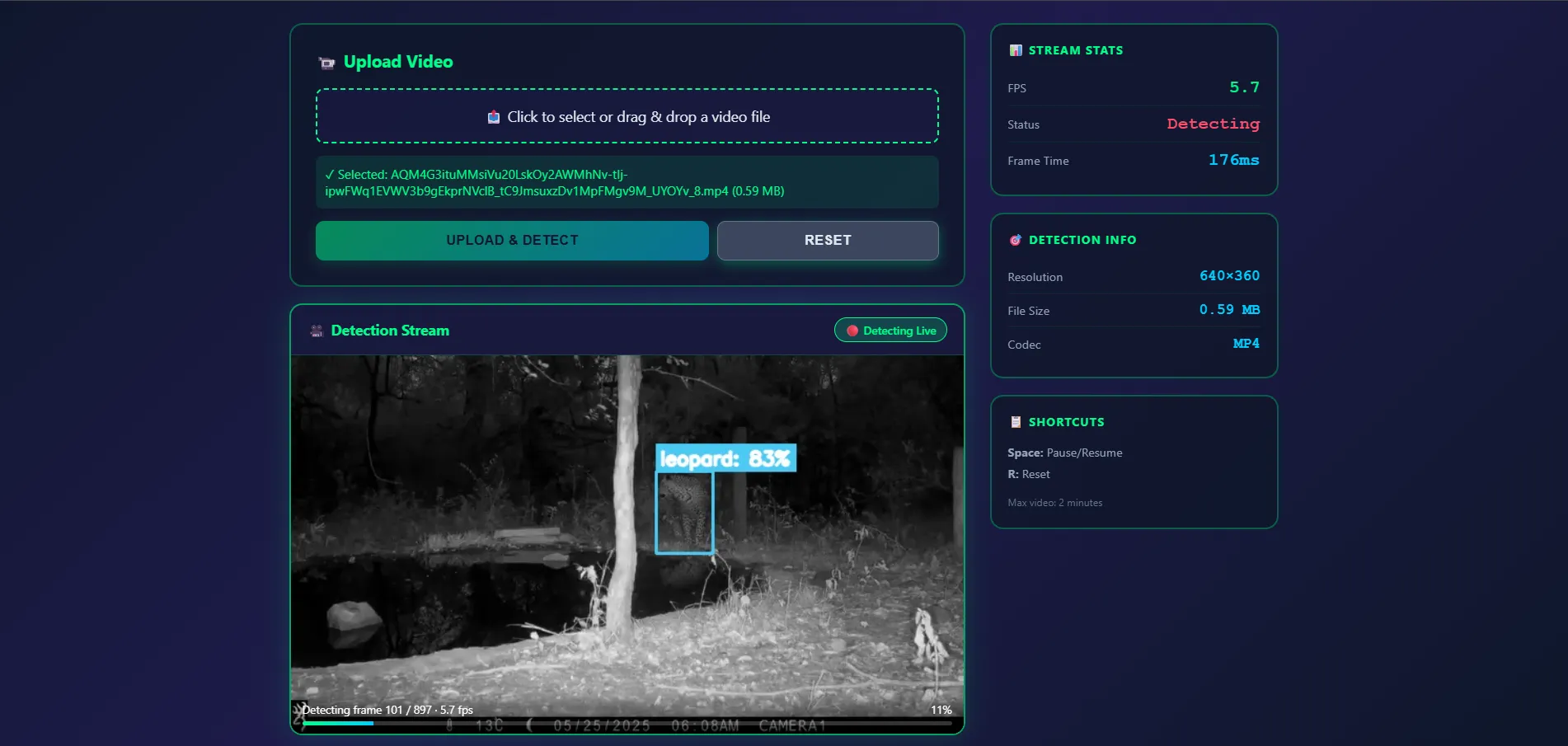
We trained a custom YOLOv11 model and wrapped it in a frame-sampling, voting-based pipeline exposed through both a web dashboard and a CLI.
- Custom YOLOv11 model trained on a Roboflow-annotated dataset of 12 species.
- Key-frame extraction to speed up processing without sacrificing accuracy.
- Voting mechanism aggregating detections across frames to cut false positives.
- FastAPI web dashboard, CLI tool, and RESTful API for flexible access.
Challenges We Overcame
- Reducing false positives across visually similar antelope species.
- Balancing frame-sampling rate against detection accuracy.
- Training on a limited dataset using Google Colab T4 GPUs.
- Delivering a consistent experience across Windows, Linux, and macOS.
Technology Stack
Python
YOLOv11
Ultralytics
FastAPI
Uvicorn
OpenCV
Flask
Roboflow
Results & Impact
- Automated identification of 12 African wildlife species from video.
- Reduced false positives through multi-frame voting aggregation.
- Accelerated footage review with key-frame-based processing.
- Provided both web and CLI access plus an API for system integration.
Project Gallery
Project Details
IndustryWildlife & Conservation
Duration2 Months
Team Size2 Members
PlatformWeb / CLI (Windows / Linux / macOS)
Services Provided
DevelopmentFastAPI Backend
AI/MLYOLOv11 Detection
IntegrationWeb Dashboard & CLI